
In 1688, England swept away the encrusted vetocracy that had held back economic growth for centuries. Could we do the same today?
Industrial modernity was invented in the English midlands around the end of the eighteenth century, kicking off an unprecedented global rise in living standards that continues to this day. But what made this revolution possible was a lesser-known political revolution that took place in the previous century: a period known in English history as the Glorious Revolution.
Today, the Glorious Revolution is remembered for having introduced the system of constitutional monarchy, which subordinated the power of the monarch to Parliament. What is really interesting, though, is how Parliament used its new power: to untangle excessively strong and complex property rights, making it possible for the first time for sustained investments to take place in infrastructure and agriculture across England. And unlike in most other political revolutions, this happened almost entirely peacefully and with the consent of the people whose rights were being redrawn.
Fragmented political and property rights have again become one of the Western world’s biggest problems, leading to the ‘vetocracy’ that paralyzes many developed countries. Could we foment a Glorious Revolution of our own?
Multiple scleroses
Seventeenth-century Europe was economically stagnant. Despite intellectual advances like the creation of patent systems, the flourishing of mathematical schools, and the founding of learned societies like the German Leopoldina and France’s Académie des Sciences, the physical world saw only plodding progress.
Agriculture was practically the only game in town. Almost everyone lived in small rural settlements: fewer than ten percent of Europeans lived in towns of more than 5,000 people in 1500. By 1700 this had grown to just 12 percent; and by 1800, to 15 percent. In France, Europe’s most populous country, nearly 70 percent of the workforce worked in agriculture between 1695 and 1790. Germany was similar, and Scandinavia, Russia, Eastern Europe, Southern Italy and Spain were possibly more agrarian.
The default was for countries to continue for centuries with virtually no growth. Spanish output per capita was flat for half a millenium between 1300 and 1800. Other areas saw temporary bursts of growth, followed by stagnation or reversion: Swedish and Portuguese incomes were lower in 1800 than in 1550, and the Italian efflorescence during the Renaissance was followed by steady decline for centuries. Even the Dutch golden age of 1500 to 1680, which saw the Netherlands buck the European trend with a large majority of its population working in industry or commerce and living in towns, was followed by more than a century of relative stagnation.
Property ownership was so fragmented that nobody investing in improvements could expect to make a return. Splintered ownership of farmland discouraged the adoption of new crops and rotations. Rigid inheritance rules made it prohibitively difficult to invest in improvements to land or infrastructure. Roads were bad because nobody took responsibility for them, hindering the transportation of manure for fertilizer and preventing the trade that would allow different areas to specialize in different crops. Agricultural yields were so low that nearly everybody had to work to produce food instead of in other industries like mining or manufacturing.
Many European states tried to solve these problems, and nearly all failed. The reason was usually the same: monarchs depended on the support of landowning aristocrats and clergy, and those landowners had no confidence that reforms would leave them better off.
In 1746, Spain’s King Fernando VI tried to replace his country’s complex tax system with a single income tax to fund public investment, but was blocked by nobles, the church, and municipal oligarchies. In 1776, French Minister of State Anne-Robert-Jacques Turgot tried to liberalize the property system and replace the patchwork of taxes with a single land value tax, but the Parlement of Paris refused to register his reform edict. In 1781, Austrian Emperor Joseph II abolished formal serfdom, but ex-serfs remained effectively bound until 1848, since the crown enforced landlords’ prerogatives.
Only one country succeeded in modernizing its property rights in this period: England. The Glorious Revolution resolved the conflict between landowners and the Crown by handing the country to the landowners. One might expect this to have produced an oligarchy that jealously guarded its privileges. But the landowners, precisely because they were empowered, did something their continental counterparts could not. They dismantled the fossilized property arrangements that had blocked development elsewhere, and in doing so, set the stage for the Industrial Revolution.
The Glorious Revolution
In 1685, James II ascended the English throne. Several previous kings had faced accusations of covert Catholicism, but James II made no secret of his faith. He appointed Catholics to a range of government posts and tried to assert control of local governments, so that he could appoint the officeholders who oversaw elections to pack Parliament with loyal stooges. All this fueled fears that James was imposing Catholic, absolutist rule. According to one contemporary, at least 20,000 opposition pamphlets were circulated across the country during James’s short reign.


In June 1688, seven aristocrats wrote to William of Orange, inviting him to invade England with their support. William was the Dutch Republic’s head of state, married to James’s eldest daughter, Mary and, crucially, a Protestant. In their letter, the seven wrote that ‘the people are … generally dissatisfied with the present conduct of the Government in relation to their religion, liberties, and properties (all which have been greatly invaded)’.
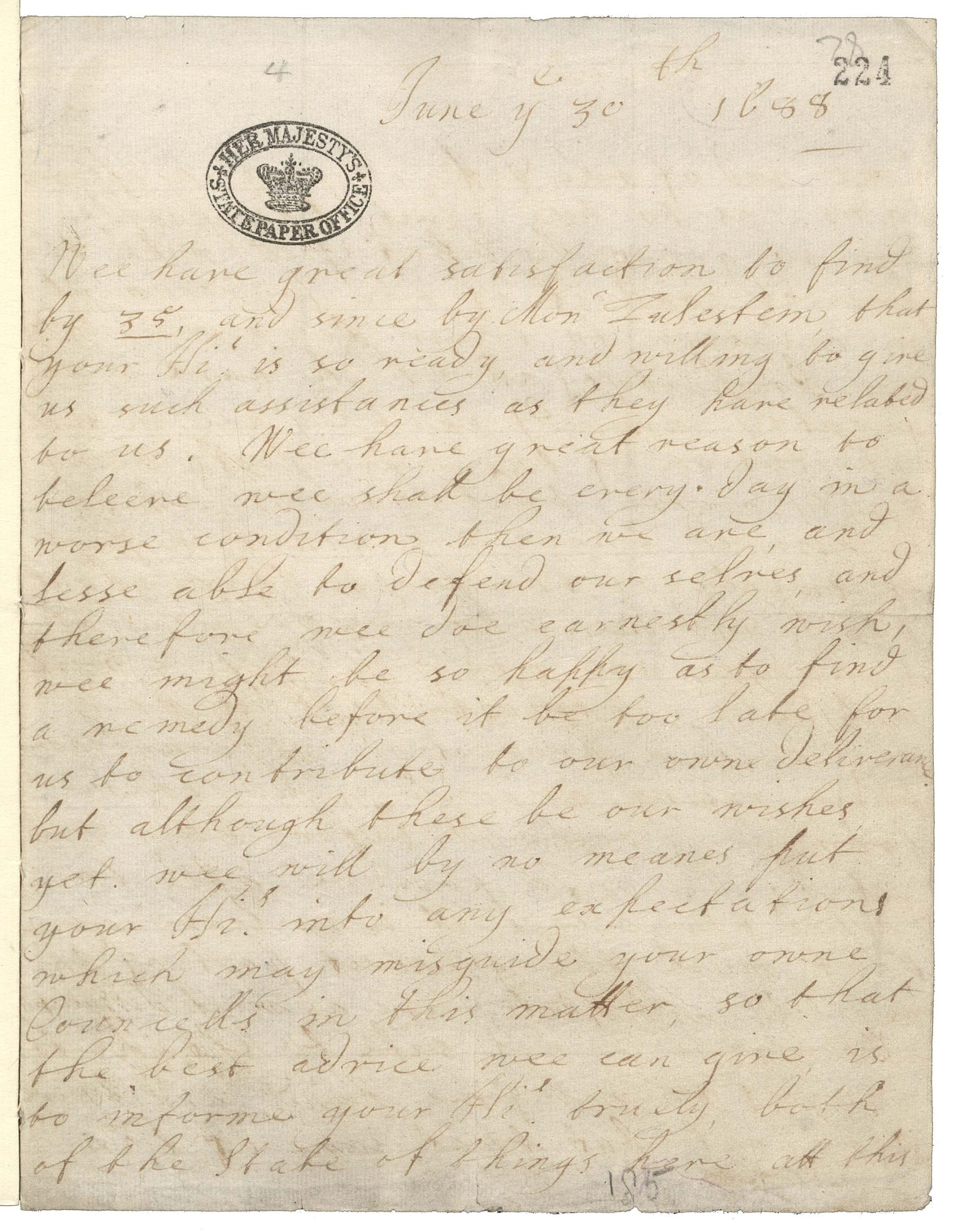
William landed at Torbay on 5 November that year with 20,000 Dutch soldiers and English exiles. The English defending army defected or melted away without a fight, and James fled to France, effectively abdicating. William and Mary were crowned as joint monarchs in April 1689.
A new political settlement quickly emerged. Parliament passed a Bill of Rights, reestablishing its own legal supremacy; the Mutiny Act of 1689 forbade a standing army without parliamentary assent; and taxes were decreed to expire after a year, requiring the monarch to call Parliament for renewals. Later acts established regular elections.
Today, this cementing of Parliamentary supremacy is what the Glorious Revolution, as William’s invasion came to be known, is most remembered for. But a second consequence was even more important: dramatically increased legislative productivity.
In the lead up to the Glorious Revolution, James II and his predecessor, his older brother Charles II, had been trying to rule without Parliament, dismissing it before it could pass legislation or simply not calling it. Parliament met infrequently at the end of Charles II’s reign, especially after the Exclusion Crisis of 1679, in which it had sought to pass bills excluding the future James II, by then a known Catholic, from the line of succession. Following this, it did not meet again for nearly all of James II’s short reign.
Before 1688, bills frequently failed because the monarch cut sessions short. After it, Parliament became an extremely active legislature, passing thousands of acts. Before the Glorious Revolution, legislative sessions had been short and variable: the average number of working days per session was 61 between 1660–85 and 57 for 1660–89. While some sessions lasted over 400 days, most lasted fewer than 50. Afterwards, legislative sessions met annually, owing to the requirement to renew military funding and the right to court-martial deserters. They began in autumn or winter and continued for more than 100 days.
From 1660 to 1689, about 25 acts passed per session. Between 1688 and 1724, the average increased to 50–75 acts per session, rising to over 100 and eventually 200 per session in the late eighteenth century. Access also broadened. Before the Revolution, only the largest landowners brought bills to Parliament. Afterwards, many more minor gentry with no obvious political connections applied. The vast majority of these bills sought to reform landholdings or property rights in some way, either consolidating them, removing legal restrictions on how the land could be used, or allowing developers to charge for access to new or improved infrastructure.

Fragmented ownership
Across early modern Europe, plots of land were small as a result of the traditional open-field system, in which tenant farmers held many small strips of land scattered across different fields, as well as inheritance laws that divided landholdings equally among descendants.

The problems with small fields grew as technology improved, creating the potential for new economies of scale. The horse plough was faster than a team of oxen, but on a farm of many small plots, the ploughman spent more time turning and moving between them, so the advantage was dwarfed by a horse's greater food cost. Under Russia’s equivalent system, peasants wasted as much as half their time moving between land strips. English farmers faced similar inefficiencies.
Small farms and the open-field system also made it hard to adopt better crops. The medieval three-crop rotation left each field fallow every third year to restore nitrates to the soil. The Norfolk four-course rotation eliminated this dormant period by sowing clover and turnips in the off year, which served equally well to replenish nitrates. But this was almost impossible on shared fields. Turnips and clover were hard to protect from neighbors’ grazing animals, which would not stay within strip borders. And in a fragmented system, anyone who wanted to sow a new crop would have to duplicate the work already shared by those sowing other crops, meaning that switching over required near-universal agreement.
As well as small farms and the open-field system, a third problem was common land: an uncultivated area on which local landowners had the right to graze their animals. The free mingling of livestock made selective breeding difficult, since owners couldn’t control which mated with which. It also meant this land was often overgrazed, since everybody was incentivized to overuse it. Since it was owned collectively, it was difficult to agree to do anything else with it: it could be reorganized or improved only by sending a petition to Parliament showing unanimous support of local landowners. A single holdout could block any change.

Over the century following the Glorious Revolution, Parliament steadily grew more confident in reorganizing land rights, drawing on the legitimacy generated by being elected by, for, and of the landowning classes. It gradually eased the process for enclosing and consolidating landholdings, with petitions eventually needing support only from a supermajority of landowners rather than all of them. By the 1740s, it was passing enclosure laws with 90 percent support of the landowners affected; by the 1750s, 80 percent; and later in the century, 75 percent. The process was formalized in 1801, and the General Inclosure Act of 1845 set up a standing body to enclose remaining fields.
Enclosure was sometimes acrimonious, since a minority of rightsholders had their property restructured against their will. Some rights to common land were ill-defined, and some people lost them without adequate compensation. On the whole, however, enclosure benefited most people: it made land more productive, and nearly everyone ended up with more valuable holdings than they had before.
Between 1600 and 1815, Parliament passed 3,682 enclosure acts, almost entirely after the Glorious Revolution. This became possible partly because of the government’s increased legitimacy – as government by, for, and of landowners – partly because of the government’s increased legislative productivity – since Parliament sat longer and more predictably – and partly because each reform made sure to have overwhelming local support.
Other countries took centuries longer to solve the fractured land problem. German land was not consolidated until after the Second World War, when millions of acres went through a process like England’s and wheat yields tripled. Taiwan, Korea, and Japan used similar supermajority schemes to consolidate their small fields around the same time as Germany. In early 1900s Russia, Pyotr Stolypin’s land reforms used supermajority petitions by peasant farmers to divide their landholdings, boosting productivity so much that the country became the world’s top grain exporter. The Punjab is the breadbasket of both India and Pakistan in part because both sides consolidated their fields into rational squares, unlike the rest of the subcontinent.
Modern agriculture requires consolidated fields, and consolidated fields require someone with the power to reorganize landholdings on a large scale. But before 1800, only the English Parliament, armed with new authority after the Glorious Revolution, managed to carry out a successful program of enclosure.

The dead hand of entail
The Revolution also addressed a second problem: the large quantity of land locked up by strict inheritance laws. European aristocratic families were obsessed with preserving their estates in perpetuity, and horrified by the idea that spendthrift heirs might sell, mismanage, or dismember them. They also wanted to provide for family members outside the direct line without splitting the estate, which would eventually destroy the family.
The details varied, but in England this was achieved through a legal device called a strict settlement. These devices guaranteed payments to widows, younger sons, and daughters marrying out of the family, while preventing an heir from mortgaging, subdividing, or selling any of the estate without their own heir’s consent.
Settlements also included an entail, a long list of successors to whom the estate would be passed. These legal devices are well known in fiction: they disinherit the Bennet sisters in Pride and Prejudice and Lady Mary Crawley in Downton Abbey, and drive the plot of The Quincunx.
Over the 1600s, settlements became increasingly restrictive and harder to break. Conveyancers invented a device that prevented current landholders from undoing the entail. On its own terms, this worked. Large estates tended to be held together. Heirs could not squander their money on gambling and prostitution, and were more likely to marry and have children: owners of entailed estates were nearly 15 percentage points less likely to be childless.

But settlements were inflexible. Landowners could be prevented from selling, mortgaging, or improving their estates without the consent of an heir – even if no heir had yet been born.
This inflexibility could reach absurd extremes. In 1697, Zenobia Hough petitioned the English Parliament for the rights to sell land. Zenobia had a willing buyer, but could not sell her houses, fields, and water mill near Manchester because the settlement gave her husband Daniel the right to manage the property. But Daniel had been missing for 14 years, and no one knew whether he was alive or dead.
An investigative commission in 1829 reported a similar case. A barrister, Hasler Capron, explained that his client had inherited land in 1762 at the age of eleven. The settlement did not include the right to harvest timber. So for 67 years, ‘not a stick [had] been cut’ and ‘all the old trees, with scarcely an exception, [had] become decayed and valueless’.
This inflexibility left swaths of estates in a bind. An owner might want to mortgage one field to raise the funds to drain others, almost certainly creating a large return. Any conceivable heir would want this too. But if the heirs were underage or not yet born, no mortgage could proceed.
A modern reformer might expect the solution to be simple: abolish entails and grant landowners the freedoms we now take for granted, accepting that many estates would be squandered and tens of thousands of widows and unmarried daughters would lose the stipends promised them.
Parliament, now sitting far more often and able to consider many more proposals than it had before, did nearly the opposite. It heard petitions from both sides, following the longstanding principle of expropriation with compensation, and broke settlements only when the living owner was proposing improvements expected to benefit their heirs as well. Perhaps that is why undoing the property rights of landed elites in this way faced so little opposition, allowing Parliament to pass 3,233 estate acts between 1689 and 1830, each tackling a single estate. These acts clustered around London and the industrializing North West, where the returns from changing land use were highest.

The practical consequences were considerable. In 1695, William, Duke of Bedford wished to build a wet dock on land he owned at Rotherhithe in Surrey, now part of London. His son was dead, which under the old settlement would have prevented any change of use. He and other family members petitioned Parliament, which promptly passed an act vesting the Howland family’s property in trust to raise the necessary funds. The Great Wet Dock (later called the Greenland Dock in the eighteenth century because it was used by whaling ships coming from Greenland) was completed in 1700. It was leased to the South Sea Company in 1725. By 1756 Rotherhithe had three shipbuilding docks; by 1892, eleven, building ships for the East India Company among others.
Estate acts enabled many grand projects. They raised the capital to improve the Bridgewater Canal, often considered England’s first true canal because it did not follow an existing river. The same powers helped finance railways and turnpikes, allowing parts of estates to be sold or repurposed.

Estate acts also helped ‘adventurers’ convert hundreds of thousands of acres of marshy fenland in eastern England into prime farmland. The Grosvenor, Portman, and Bedford families used them to develop Mayfair, Belgravia, and Bloomsbury by selling 99-year leases to developers, long enough to allow them to recoup their costs while eventually falling back into landowner control. Without estate acts, they likely could not have granted leases longer than 21 years.
As with communal land, other European countries failed to solve this problem for decades or centuries. Perhaps a third of the Castile region was entailed by the late-eighteenth century; Spain abolished entails only in 1841. Italy repealed its equivalent in the 1865 Civil Code after unification, and Germany only with the 1919 Weimar Constitution. England’s approach – led by landowners, and taking care to make changes to property rights only when those affected benefited – seemed to lead to much faster reform.
It was possible to fix settlements without landowners’ consent. Napoleon’s Code Civil of 1804 restricted entails on the grounds that they constrained credit, reduced incentives to improve land, and pulled property out of markets. But the top-down approach caused a different problem across the territories where it was imposed: morcellement, the excessive subdivision that entails had been designed to prevent, and the very problem England’s approach avoided.
For whom the road tolls
The Revolution’s third achievement was infrastructure. The division of labor is limited by the extent of the market. Even today, the transport costs of heavy, low-value goods like gravel and sand mean that they are usually produced locally rather than being manufactured at scale in one place and shipped around the country or the world.
This was far worse in early modern Europe, when canals were rare, many rivers were not yet navigable, railways did not exist, and, above all, roads were terrible. In sixteenth-century Spain, wheeled transport was virtually useless; it was faster to travel across open country than to use a road. In late Ancien Régime France, roads were routinely obstructed by quagmires.
In 1700, English road speeds, which were similar to those on the continent, averaged 2.3 miles per hour in summer and 1.5 in winter. In 1705, the journey from London to Birmingham, a distance of about a hundred miles, took 65 hours. As the historian Cyril Hughes Hartmann put it in 1927, Britain’s roads had been better in Roman times.
The underlying problem was incentives. In the Holy Roman Empire, local governments could charge tolls on roads and rivers. But this led to overcharging without investment. Each stretch had a different authority, and each charged as much as possible while feeling little incentive to improve its own section, since no single section made much difference to the journey as a whole. Timber merchants on the Rhine between Andernach and Dordrecht complained that they had to pay around twenty separate tolls. France and Spain also had dense networks of internal customs gates, including around Paris.
England’s rulers forbade local governments from charging tolls. But this left them with no motivation or ability to improve roads. In both cases, splitting infrastructure into the wrong pieces gave operators the wrong incentives.
Parliament’s solution, after the Glorious Revolution, was the turnpike act. A group of landowners and merchants would form a non-profit corporation, adopt a road, improve it with paving, bridges, and embankments, and charge tolls to cover costs. (Though they could not make profits, better roads increased property income, often by as much as a fifth per acre.) These turnpike trusts usually took over existing roads, though they sometimes added shortcuts and bypasses on new alignments secured through compulsory purchase (eminent domain).
Turnpikes dramatically improved road quality. Muddy tracks were covered with McAdam surfacing (later macadam, and tarmac when combined with tar) or Telford paving. Smoother surfaces meant carriages could be lighter, faster, and easier to pull, needing fewer horses and less fodder.

_(cropped).jpg)


By 1840, Britain had 20,000 miles of turnpikes, more than twice France’s density of paved road per square mile, and nearly ten times Spain’s. By 1760, average travel speeds in France were half Britain’s. By 1820, British speeds had quadrupled to eight miles per hour, dazzling foreign visitors. Karl Philipp Moritz, a German traveller in England in 1782, called the country’s roads ‘incomparable’, writing: ‘I am astonished how they have got them so firm and solid … A thousand charming spots, and beautiful landscapes, on which my eye would long have dwelt with rapture, were now rapidly passed with the speed of an arrow.’ César de Saussure, a Swiss visitor to England in the 1720s, wrote that the English high roads were ‘magnificent, being wide, smooth, and well kept’.
Road freight costs fell from around 1.2 shillings per ton-mile in 1700 to 0.7 (in 1700 prices) by 1800. Diary surveys confirm that travelers greatly preferred turnpike roads for the smoother, more comfortable journeys they afforded.
A similar model improved rivers and canals. In 1700, freight on navigable rivers like the Thames and Severn cost just 0.12 shillings per ton-mile, compared with 1.2 shillings by road. The problem was that many rivers were shallow and impassable. River improvement trusts dredged channels to open them up to freight traffic, covering their costs through tolls. The total navigable length of British rivers rose from 850 to 1,600 miles by 1750.

Canals were different: they were dug across virgin land and financed by for-profit companies. Four thousand miles of canal were built before 1840, connecting river networks across watersheds and linking industrial towns like Birmingham and Manchester, which lacked natural waterways. By 1850, England and Wales had more navigable waterways per square mile than France, Spain, and Germany.

Together, improvements in roads, rivers, and canals cut transport costs by 75 percent. This enabled a degree of market specialization unseen in the rest of Europe. Manure could now be shipped from where it was plentiful to where it was scarce, on its own raising English wheat yields by a fifth between 1700 and 1840. The Bridgewater canals made Manchester’s industry possible by cutting coal costs there by half.
Regions specialized. Cheshire became a specialist in cheese. Stoke made the nation’s pottery, Burton its beer, and Sheffield its steel. A national wheat market formed, with prices converging across the country. In the 1650s, entrepreneurs in inland Lancashire built a cottage industry, exporting cotton textiles to London and nearby villages. By 1750, and especially by 1800, industries could scale and agglomerate. By 1800, Britain had 95 percent of the world’s cotton spindles, and output had grown more than thirtyfold since the seventeenth century.
Across the rest of Europe, internal barriers took far longer to dismantle. German river tolls were scrapped by the 1831 Convention of Mainz; other barriers fell with the Zollverein after 1834. Spanish internal customs disappeared with the Mon-Santillán reforms of 1843–45. England solved its tolling problem earlier and more thoroughly by bringing the immediate beneficiaries into government and letting them drive reform.
Gloriouser and gloriouser
One reason the Industrial Revolution happened in England and not France, the Netherlands, or Germany was that its land, infrastructure, and capital markets had already been transformed.
In 1650, it was difficult to raise capital for a factory, or to transport raw materials from mine to factory and finished goods to customers. There was not nearly enough food to sustain the workers to procure these materials at scale. If the steam engine, the gas lamp, and the spinning jenny had been conceived at this time, it would have been far harder for their inventors to manufacture and sell them.
The Glorious Revolution broke these constraints. Agricultural yields rose by roughly 45 percent, while the share of the workforce in agriculture fell from 50 percent in 1600 to 30 percent in 1800. This agricultural revolution, which came as much from efficient institutions as from new technologies, transformed England’s economy, generating surpluses that fed a growing industrial workforce.
A century after William of Orange landed at Torbay, the England of the late eighteenth century was ready for an incredible acceleration of innovation across every sector, from watches to navigation, that would make it the richest country in the world. Had England remained as institutionally sclerotic as the rest of Europe, the Industrial Revolution could not have been as transformative.
A new Glorious Revolution?
Early modern Europe’s property rights held back growth not because they were too weak but because they were too strong and too rigid. Even those who stood to benefit had no power to alter them. Elites across Europe blocked reforms that would have benefited their nations as a whole.
Similar forces are at work today. Incumbents have property and a stake in elaborate regulatory systems that exist, sometimes openly, sometimes quietly, to protect them and their rights. Zoning, historic preservation, judicial review, environmental regulation all serve, among other things, to protect the property values of existing homeowners in the area. European workers hold what amounts to a right to generous compensation in the case of dismissal, which in practice discourages the restructuring that drives innovation.
As in premodern Europe, the costs of these tangled rights are high enough that many incumbents would actually gain from well-designed reform. In Palo Alto, every homeowner could be paid tens of millions of dollars to accept Manhattan-level density, and developers might still clear hundreds of billions in profit. Danish workers receive extremely generous state unemployment insurance, up to 90 percent of income for two years, in exchange for giving up labor protections, a tradeoff the state can afford thanks to higher growth.
The lesson from the Glorious Revolution is that reorganizing rights is much easier if reformers work with incumbents rather than attempt to override them. A legislature made up of landowners, which sought supermajority approval for change or took care to make sure nearly everyone benefited from major changes, turned out to be far better at radical reform than any absolutist monarch.
These methods still work. Take housing. Small minorities often oppose any change. But building a coalition for development is as possible today as it was for enclosure. Japan, Taiwan, and Korea each used supermajorities of landowners to replan roughly a third of their cities at higher densities with better infrastructure. A very similar scheme, Pinui Binui, delivers many of Israel’s new homes. In the UK, social housing tenants have approved dozens of proposals to demolish and upgrade their own social housing.
While many of today’s challenges are new, a surprising number have been with us for centuries. But so have their solutions.

Subscribe for $100 to receive six beautiful issues per year.