
Its royal family used a charm offensive where military power failed.
At the beginning of the 1833 dry season, a monk named Mongkut set out for Sukhothai, the old capital of Siam. Long journeys by boat and on foot for study, teaching, and religious observance were common for monks like Mongkut. Theravada Buddhism was a huge part of life in premodern Siam, and at any given time, a small percentage of adult men were ordained as monks. As they traveled around the kingdom, locals provided them with food, clothes, and lodging.
But Mongkut was no ordinary monk. He was the 43rd child of King Rama II. Born to one of Rama II’s senior consorts, he was a high-ranking son and in the running to inherit the throne. As such, he would have been traveling with a retinue of attendants as well as fellow monks. The kingdom to which Mongkut was an heir covered most of modern-day Thailand, plus parts of Laos, Cambodia, and Malaysia, and contained around five million subjects. Though most of these subjects were poor rice farmers, Siam’s largest city, Bangkok, was a major trading port, with a dense network of canals lined with houses on stilts, and an ethnically diverse population.
In contrast to the bustling capital, Sukhothai was by this time largely abandoned. From the thirteenth to fifteenth centuries, Sukhothai had flourished as a political, cultural, and religious center, but it had since been eclipsed by Ayutthaya to the south and, since its founding in the eighteenth century, Bangkok. When Mongkut arrived there, he would have been greeted, as visitors are today, by crumbling stupas (religious buildings), serene Buddha statues, and rust-colored brickwork weathered by centuries of blistering sunshine and tropical rains.
At some point during his stay, Mongkut came across a remarkable object: a four-sided, black stone monolith, about a meter high and inscribed with an unusual script. The stone would become known as the Ramkhamhaeng Stele. Purported to date from 1292, it is often cited as the oldest surviving example of Thai writing.
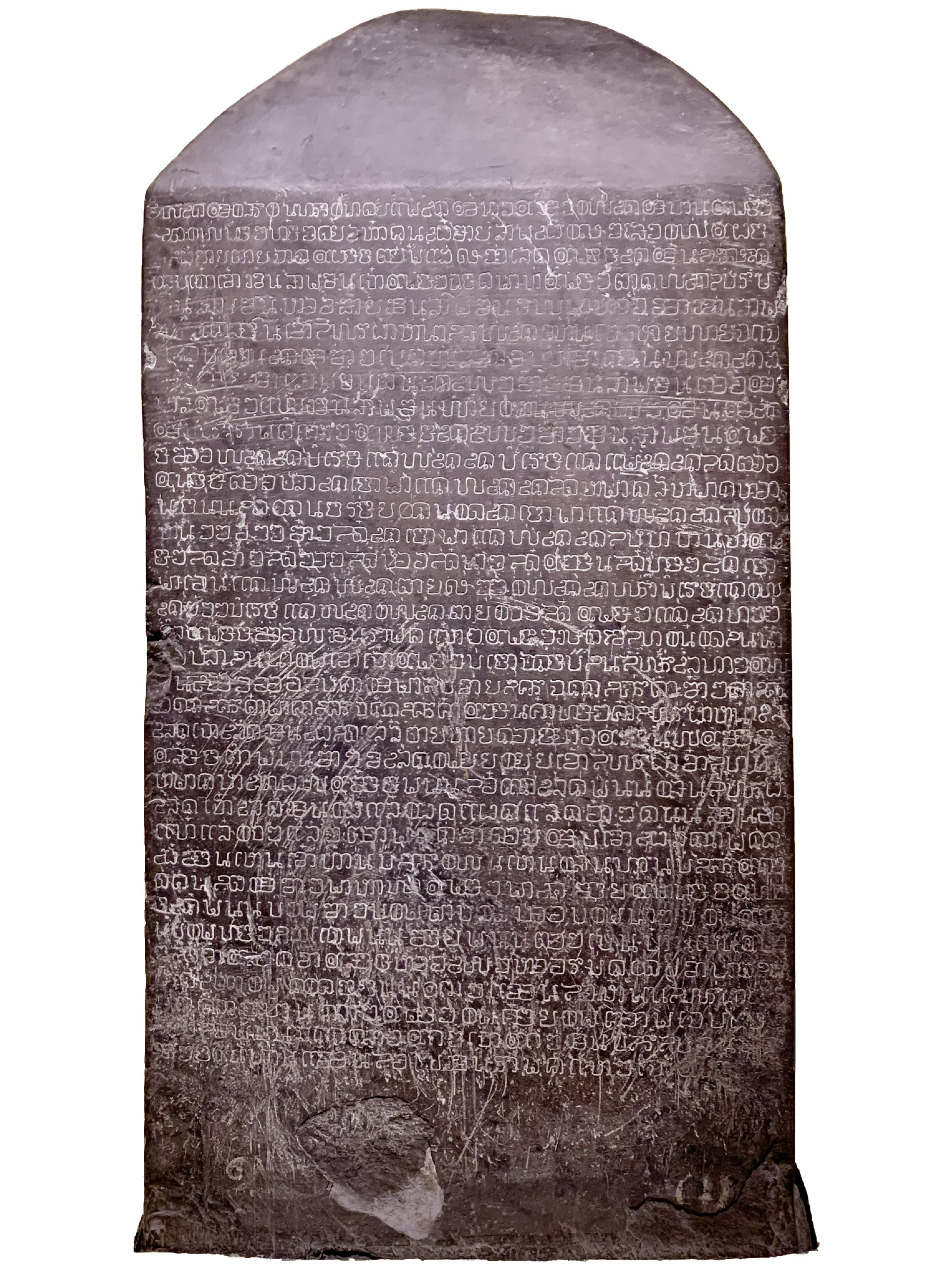

Mongkut brought the Stele to Bangkok and assembled a committee of scholars to decipher its enigmatic inscription. They compared it to known forms of old Thai and other related scripts, analyzed linguistic patterns, and collaborated with learned monks to interpret unfamiliar words and characters. What they found was extraordinary: the 124 lines of archaic text told of an ancient Thai kingdom ruled by a wise monarch, Ramkhamhaeng. According to the Stele, Ramkhamhaeng’s kingdom combined a literary tradition, a sophisticated legal and political system, independence, sovereignty, secure geographic boundaries, Buddhist kingship, and just rule.
The discovery of the Stele was, as it turned out, serendipitous. Over five centuries, European powers colonized virtually every other territory on Earth, with exceptions that can be counted on the fingers of one hand. Japan is the best known example. Siam, perhaps the next clearest case of a state that resisted foreign occupation and retained sovereignty, is much less publicized. Siam held out through a combination of diplomacy, reform, and careful image management. By providing evidence of a longstanding complex civilization, the Ramkhamhaeng Stele was just the sort of brand asset the kingdom needed.
The Siamese Holdout
By the 1830s, the Siamese court was watching nervously as British power radiated outward from India. Just a few years before Mongkut’s discovery, during the First Burmese War of 1824–1826, British gunboats sailed up the sacred waters of the Irrawaddy River and humiliated the ancient kingdom of Burma, extracting huge territorial concessions from Siam’s long-term rival. To the east, French missionaries were active in Vietnam and Cambodia, representing the earliest phase of France’s colonial ambitions and its mission civilisatrice. One by one, Siam’s neighbors began to fall and it found itself the sole Southeast Asian holdout against European colonialism.
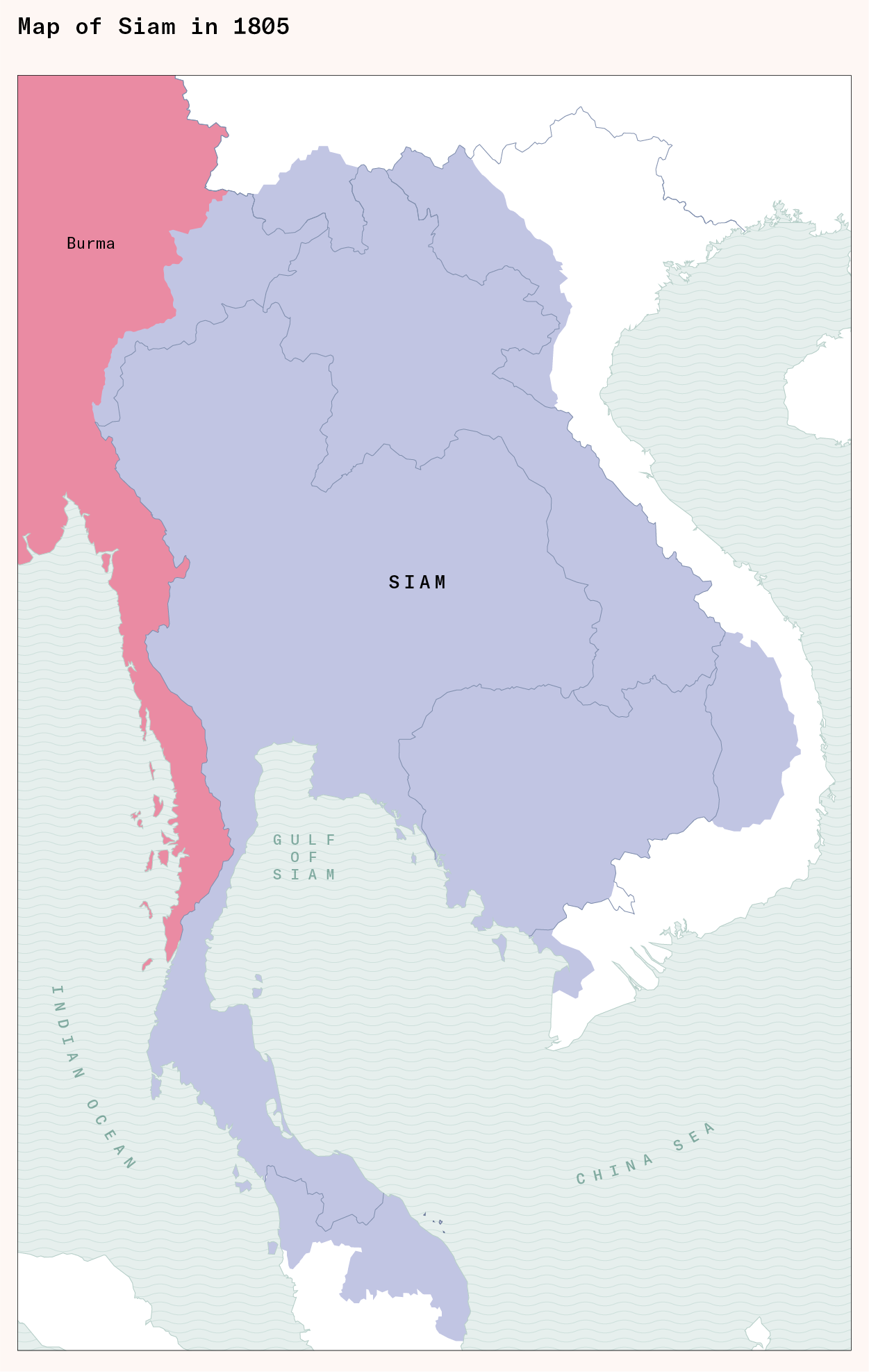
The vanquished countries pursued a range of resistance strategies, all of them unsuccessful. Burma fought a series of doomed wars against Britain, only to be annexed. Cambodia willingly allowed itself to become a French protectorate, viewing this as the lesser of several evils after decades of encroachment from neighboring Siam and Vietnam, only for that protection to evolve into colonial rule within French Indochina. Vietnam relied on the country’s historic ties to China to ward off France, but its harsh treatment of missionaries and minorities gave Europeans an easy pretext for intervention.
Instead, Siam’s leaders hoped that demonstrating it already had clear markers of civilization would undermine the pretexts for colonization. Even in the nineteenth century, countries did not want to be thought of as engaging in naked land grabs. Successful colonial ventures usually combined ostensibly noble justifications and straightforward power-hungry motivations. Europeans believed that technologically advanced, Christian nations had a moral duty to bring progress to ‘backward’ peoples who lacked proper government, writing systems, and cultural refinement. This ideology created domestic political support and international legitimacy for territorial conquest.
Mongkut’s discovery of the Stele was comparable to finding a lost Magna Carta at just the right moment. Siam’s rulers realized that written language was key to civilizational legitimacy in Western eyes, and the inscription provided exactly what they needed: tangible evidence of a tradition of literary sophistication that overturned European assumptions of primitiveness.
Diplomacy
In 1855, a new British special envoy to Southeast Asia arrived in Bangkok. Sir John Bowring was governor of recently conquered Hong Kong and represented a nation at the height of its powers. By this point, Britain controlled almost a fifth of the world's land mass, produced over half its industrial output, and had the most powerful navy the world had ever seen. Siam, on the other hand, had been in self-imposed relative isolation from the West since 1688, and had recently been accused of dealing contemptuously with British and American trade missions. John Crawfurd, a British envoy, described the Siamese as ‘unusually sordid, insincere and rapacious’. Under Rama III, Siam’s king and Mongkut’s older half-brother, most people thought Siam was headed down the same path as its neighbors.
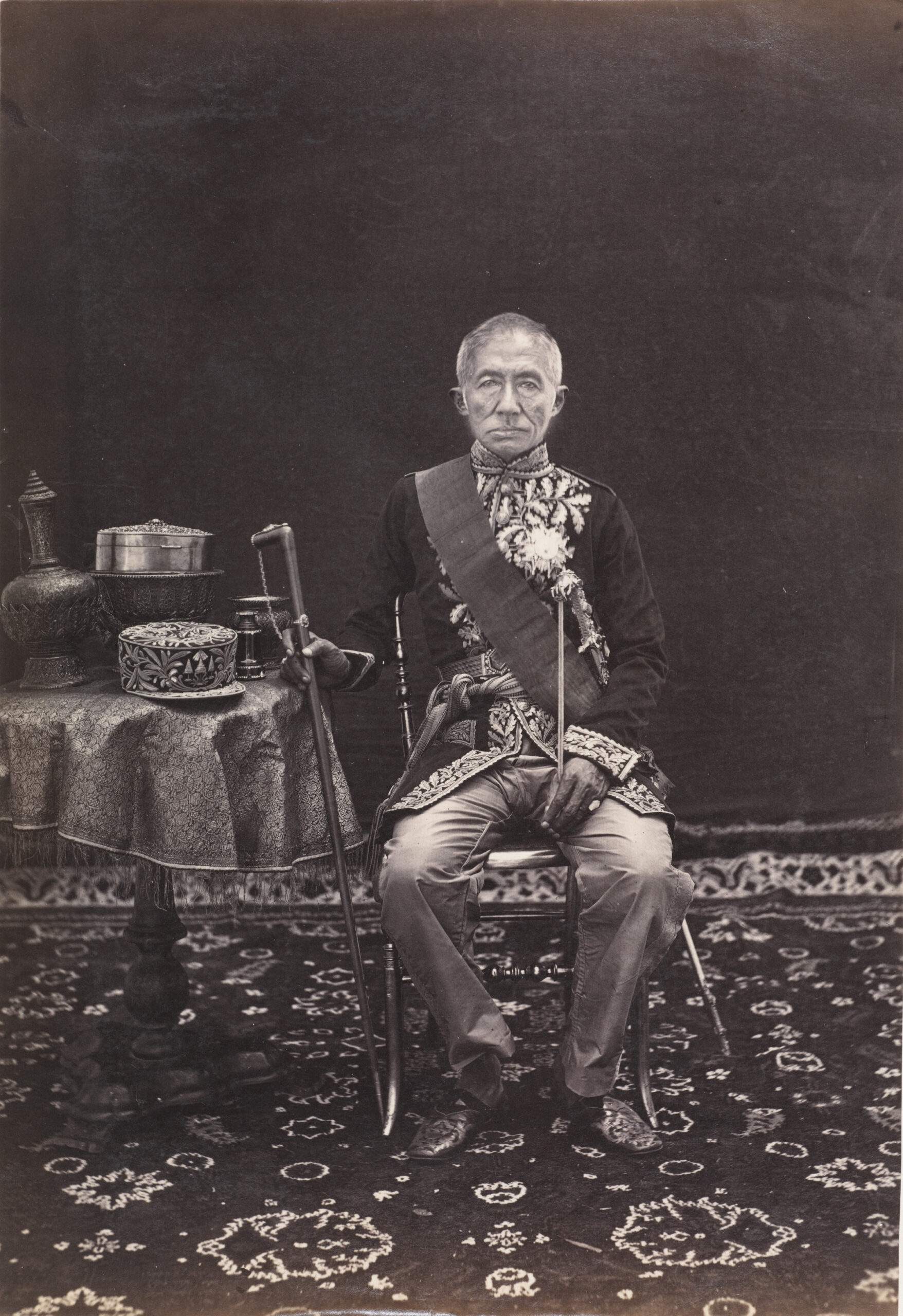
After Rama III died in 1851, Mongkut was crowned king, taking the name Rama IV. Mongkut was popular with the British, who thought him more friendly to their interests than the other contenders for the throne. As a monk, he had studied Western languages, sciences, and technology. He spoke English and Latin and had continuous contact with diplomats and Catholic and Protestant missionaries. He was fascinated by the Western concept of material and technological progress, an idea in stark contrast to Buddhist cosmology’s emphasis on repeated cycles of decay.
.jpg)
European diplomats had often found Asian rulers, including Mongkut’s predecessors, to be aloof and disdainful. Arriving in Siam for his meeting with the new king, Bowring would have expected more of the same. Instead, he found a ruler who displayed a sophisticated understanding of the Western world. King Mongkut received Bowring in his private apartments for cigars and wine. They bypassed interpreters and spoke in English. Bowring noted that the king’s library had a vast array of books ranging from Western science to novels by Sir Walter Scott.
British imperialists were unaccustomed to negotiating with Asian rulers who could meet them on their own intellectual ground. This was an era in which Thomas Macaulay, the colonial administrator and historian best known for his History of England, could write that ‘a single shelf of a good European library was worth the whole native literature of India and Arabia’. Bowring, however, was willing to believe the Siamese were cultured. His influential 1857 work, The Kingdom and People of Siam, featured the Ramkhamhaeng Stele, recognizing it as a major historical document that provided evidence of early Thai writing and was crucial to understanding Sukhothai's sophisticated governance and society.
The treaty that Mongkut and Bowring negotiated was a decisive shift in the relationship between Britain and Siam. Three decades earlier, in 1826, a treaty had opened limited trade between the two countries. The 1855 treaty was by no means generous. It capped Siamese import and export duties at 3 percent and gave significant extraterritorial rights to British subjects, meaning Britons could not be tried in Siamese courts. But the treaty massively increased foreign trade, and crucially, Siam continued to be treated as a sovereign negotiating partner.
The contrast with other countries in the region is stark. Following its defeats in the Anglo-Burmese Wars of 1824–26 and 1852, Burma had been forced to surrender four provinces, pay a crippling £1 million indemnity (about $160 million today), and accept the presence of a British overseer with veto power over the king’s decisions. Similarly, China’s attempt to enforce a ban on Britain’s opium trade in 1839 had resulted in the loss of Hong Kong and the start of what nationalists would later dub the ‘century of humiliation’. Mongkut demonstrated what strategic compromise could achieve when resistance failed.
Xenophilia
Siam’s distinctive approach was not as simple as a cigar-smoking bibliophile king. That was a small part of a broader strategic performance of European norms, an attitude that set Siam apart from other countries in the region.
In response to Britain’s first embassy to China in 1793, Emperor Qianlong dismissed Western technology, declaring that the Middle Kingdom ‘possesses all things in prolific abundance’ and had no need for the goods of ‘barbarian merchants’. Chinese rulers were trained in classical Confucian thought that emphasized China’s cultural superiority, and their insularity and xenophobia made it easy for Europeans to justify their civilizing missions. Similarly, Vietnam’s Emperor Minh Mang rejected French overtures in the 1820s and 1830s. Vietnam’s isolation would later provide France with the pretext for intervention. Both rulers were products of educational systems that viewed foreign knowledge as contaminating rather than useful.
When Asian rulers did embrace modernization, they often did so reactively, after the West had already put them under substantial pressure. Despite having ancient scripts dating back to the sixth century, magnificent Buddhist temples, and sophisticated legal traditions, Burma was systematically dismantled by Britain between 1824 and 1885. The crucial differences between Burma and Siam were timing and agency. Burma was first invaded in 1824, before the ‘civilizing mission’ ideology was in full swing. King Mindon, who ruled Burma from 1853 to 1878, modernized extensively after Britain’s initial conquest, establishing telegraph lines, railways, and modern schools. Yet by then, Britain had generated military and political momentum that rendered Burma’s cultural credentials and reforms irrelevant. When Britain manufactured border disputes to complete Burma’s annexation in 1885, Mindon’s modernization efforts provided no protection against a colonial power that was, by that point, committed to conquest.
Japan also modernized reactively after the US Navy’s ‘black ships’, under Commodore Matthew Perry, forcibly ended the Tokugawa Shogunate’s policy of isolation in 1853. China attempted to do something similar following the humiliation of the Second Opium War, though with much less success. In comparison to its neighbors, Siam strategically adopted and demonstrated the markers of civilization that European powers used to justify colonization elsewhere from a position of relative strength.
In 1868, Mongkut extended invitations to British and French officials to observe a solar eclipse. This was a grand affair with pavilions and accommodation prepared for the attendees, the goal of which was to showcase Mongkut’s commitment to science. Mongkut accurately predicted the timing and location of the eclipse using a combination of traditional Thai timekeeping methods and Western astronomical techniques. According to some stories, his calculations were so precise that they trumped those of the French astronomers present.
The Siamese court knew what to perform to whom. France had long considered science to be the true marker of civilization, while Britain championed international law and free trade. Mongkut demonstrated Siamese civilization through measures that European powers used to justify colonization elsewhere.
Creating brand Siam
Mongkut did not live to see his diplomacy come to fruition: he contracted malaria at the eclipse event and died a few weeks later. His son Chulalongkorn (Rama V) was a minor at the time of his father’s death, but assumed full control of Siam in 1873, finding himself at the head of a multinational, decentralized, and dynastic kingdom.
Across Europe and its empires, traditional monarchies were adapting to an age of nationalism by imposing unified national identities from above. France had established a centralized administrative system with uniform laws, and aggressively promoted Parisian French as the national language, systematically suppressing regional languages like Breton, Occitan, and Alsatian. Meanwhile, Britain more gradually imposed standard English through education reforms and civil service requirements, displacing Welsh and Gaelic. The Austro-Hungarian Empire was, in its Magyarization policy of the 1880s, doing the same: imposing Hungarian language and culture on ethnic minorities like Slovaks, Romanians, and Croats to create a single national identity in the Hungarian part of the dual monarchy. Germany and Italy both transformed from complex patchworks of states to unified nations in the late nineteenth century.
Despite Europeans having only recently created their centralized nation states, this became the new standard for civilization. Many Asian powers lacked the cultural homogeneity, clear boundaries, and single language and government that nineteenth-century Europeans considered civilized. And these diverse and decentralized realms were ripe for divide-and-rule tactics. The British and French depicted non-dominant groups in realms like Burma, Cambodia, and Vietnam as oppressed minorities in need of their protection.
Nineteenth-century Siam was, in theory, vulnerable to the same tactics. It encompassed dozens of ethnic groups and lacked a unified Thai identity. Its people were governed by the mandala system, the traditional premodern governing system in Southeast Asia, its equivalent to Europe’s feudal system. Under the mandala system, rather than fixed borders, the king’s sovereignty faded with distance, with outer parts of the kingdom recognizing overlapping zones of authority from elsewhere.
When the British became neighbors to Siam’s south and west in the 1820s by acquiring the Straits Settlements and annexing lower Burma, their request to demarcate fixed mutual borders baffled the Siamese. European powers, once they understood the system, would attempt to exploit this difference in understanding. The French seized on Siam’s multiethnic structure, arguing that the Lao constituted a distinct race deserving protection from Siamese domination. They also claimed that the Siamese were not a true race, because they had become too intermixed with the Chinese.
Instead of giving in, Siam adapted through a program of nation-building. Chulalongkorn promoted the idea of ‘Thai-ness’, a single national identity that could accommodate Siam’s dozens of ethnic groups while presenting as a unified state to the Western powers. When confronted with French claims about distinct ethnic groups, Chulalongkorn countered: ‘The Thai, the Lao, and the Shan all consider themselves peoples of the same race. They all respect me as their supreme sovereign, the protector of their wellbeing.’
As well as a shared national identity, the people of Siam needed a shared language and clearly defined borders. The Bangkok dialect was elevated to ‘standard Thai’ and was spread through a newly created school system. The mandala system was dismantled in favor of a centralized bureaucracy, reorganized into administrative units that drew inspiration from the old mandala circles but imposed newly fixed territorial control. Modern mapping projects helped draw borders with unprecedented accuracy. A national census counted subjects who, a few decades later, were required to adopt surnames. Telegraph lines and railways created communication infrastructure that solidified Bangkok’s authority.
This approach differed dramatically from that taken by Vietnam. While Vietnam had a coherent identity dating back centuries, the ruling Nguyen dynasty struggled with adapting it to the Western concept of nationhood. Emperor Tu Duc was resolutely committed to maintaining Vietnam’s traditional Confucian order, and rejected reform. Vietnam retained a hierarchical system that privileged ethnic Vietnamese while marginalizing minorities such as the Cham and Khmer. The French capitalized on these self-imposed divisions by governing different regions separately – Cochinchina as a colony, and Annam and Tonkin as protectorates – thereby deepening regional fragmentation. The end result was an effective dismantling of the Vietnamese state.
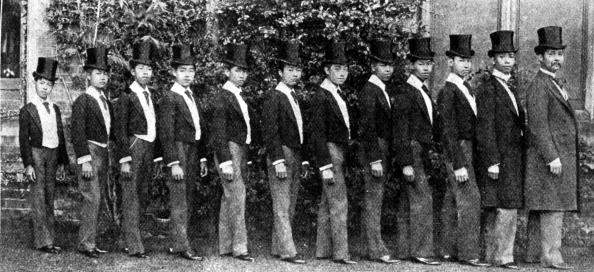
By embracing the Western concept of nationhood, Chulalongkorn was able to force Europeans to recognize Siam as a sovereign country, rather than as a wilderness in need of conquest. Chulalongkorn embarked on grand tours of Europe in 1897 and 1907, amid sustained British and French pressure on Siam’s borders. Across Europe, he insisted on being received as a monarch of equal rank to his hosts. His entourage wore Western clothing, observed European court customs, and spoke fluent English. Some of his sons, including future Siamese kings, attended elite institutions such as Eton. The message was clear: Siam was a peer.

Modernizing Siam
As well as promoting the idea of a unitary Thai identity, Chulalongkorn took up a comprehensive program of modernization and centralization. In 1885, Chulalongkorn established the first modern public school. He created the Ministry of Education in 1892. By the end of the 1890s, the kingdom had about a hundred schools teaching a standardized curriculum, including the elite Suankularb Wittayalai school that trained future government officials in both Thai tradition and Western knowledge. It is still one of Thailand’s most prestigious secondary schools.
The legal system was also up for reform. The relatively unequal treaties imposed by Britain and France had granted extraterritoriality to European subjects, exempting them from Siamese law in a humiliating denial of sovereignty. Chulalongkorn’s solution was to create a legal system that Europeans would recognize as legitimate. He assembled a team of foreign advisors, most notably the Belgian jurist Gustave Rolin-Jaequemyns, who became a key architect not only of Siam’s new civil law code but of its entire diplomatic strategy. The choice of a Belgian was strategic: adjacent to British and French legal traditions but crucially not from either colonial power. Chulalongkorn built modern law courts and staffed them with the burgeoning administrative class trained in Siam’s schools. By demonstrating that Siam possessed a ‘civilized’ legal system, Chulalongkorn could argue for the abolition of extraterritorial privileges.
Chulalongkorn also Westernized the military. He hired German advisors and sent some royals to the Prussian military academy. In line with the Prussian model, military command was centralized under the monarch, noble levies were replaced with a standing army, and a professional officer corps was established.
Religion, too, was reformed to appear more rational by Western standards. Chulalongkorn supported the Thammayut monastic order’s reformation that made Siamese Buddhism appear less superstitious and more disciplined and text based. Even time itself was standardized. The kingdom adopted the Gregorian calendar and aligned its timekeeping with international norms. The quantification and standardization of time was foundational to Western modernity. Mechanical clocks, synchronized schedules, and precise measurement undergirded capitalism, science, and bureaucratic efficiency.
Cultural transformation reached into daily life through the promotion of siwilai, a Thai loan of the word ‘civilized’ that became central to the kingdom’s modernization program. Western-style clothing became increasingly common, often through official encouragement. Practices deemed uncivilized by European observers, such as chewing betel nut, were discouraged.
Perhaps most significantly for Western audiences, Chulalongkorn abolished slavery. Before the modernizations, Siam had a complex hierarchy of debt bondage, war captives, and corvée labor. By the late nineteenth century, slavery had been abolished in most of Europe and the Americas. Thailand followed suit. An 1874 decree freed children born into slavery when they reached the age of 21. It was followed by an 1884 ban on capturing and selling ethnic minorities into slavery. The 1905 Slavery Abolition Act went further, dismantling most remaining slavery and reforming debt bondage by crediting laborers’ work toward their principal debt rather than merely as interest. By 1908, slavery was criminalized and the government had a program of education to prevent former slaves from falling back into servitude.
In 1907, the French newspaper Le Figaro congratulated the king for his successful pursuit of modernization. It drew parallels between Siam and Japan, suggesting that France may now develop a beneficial relationship with an independent Siam. The same newspaper reminded readers: ‘one must not forget that the king of Siam, though his state is Asian, is a king of dignity like that of the Europeans.’
Soft power meets hard power
Siam’s strategy was tested during the Paknam incident in 1893. French gunboats forced their way up the Chao Phraya River toward Bangkok. Officially, the Paknam incident centered on a dispute between the Siamese and French regarding territory east of the Mekong River. In truth, it was prompted by France’s growing colonial ambitions following its conquest of Vietnam.
On 13th July, three French warships attempted to force passage past Siamese fortifications. The Siamese fired upon the warships. The French fired back, killing three sailors and breaking through the Siamese defenses. The French proceeded upriver towards the capital. They demanded that Siam recognize French Indochina’s claim to the disputed territory. In the face of overwhelming military force, Chulalongkorn ceded the territory, making a necessary concession to preserve the kingdom as a whole. Siam was forced to cede territory to the French in what is now Laos and Cambodia, creating much of the modern borders of Thailand. The French established a demilitarized zone along the Mekong, and the Siamese had to pay an indemnity of three million francs. European powers readily resorted to gunboat diplomacy but even here, France felt compelled to frame its demands in terms of legitimate Vietnamese territorial claims rather than naked conquest.
Between 1893 and 1909, Siam would cede around 40 percent of its territory to France and Britain. But the strategic retreat meant Chulalongkorn preserved what mattered most: the political independence of Siam’s core territories. The lost lands, predominantly Lao and Khmer-majority regions along the Mekong, had always existed at the outer edges of the mandala system, where Bangkok’s authority was weakest. Chulalongkorn specifically prioritized the Chao Phraya valley, the Thai-majority heartland, which was the source of the kingdom’s agricultural wealth and political identity. By surrendering territories where their control was already tenuous, the Siamese leadership prevented France from advancing into this core.
Siamese Wins
Some modern historians, many of them Thai, have questioned the authenticity of the Ramkhamhaeng Stele, suggesting that it may have been modified or fabricated to serve Siam’s existential myth-making needs. The Stele’s discovery mirrors other nationalist discoveries of the era, such as the Nibelungenlied, a medieval epic poem that German intellectuals promoted as a symbol of Germanic heroism and unity.
Whether Mongkut’s discovery was a true ancient artifact or a recent creation matters less than what Siam did with it. By the time French gunboats pointed their cannons at the Grand Palace in 1893, Siam had successfully established itself as a civilized nation worthy of sovereignty. The painful territorial concessions it made were closer to concessions European countries were in the habit of extracting from each other. It was not the kind of conquest that Europeans were doing in the New World, Africa, or the rest of Asia.
The kingdom that emerged from the colonial crucible bore little resemblance to the decentralized mandala system that had puzzled British border commissioners in the 1820s. It had become a Western-style nation. The ruling family of Siam had imposed one dialect across the populace, created a centralized state with the capacity to measure and monitor its people, standardized education, built infrastructure, and abolished slavery. They even created a national myth.
Yet rather than becoming Westernized by conquest, this transformation was carefully orchestrated from within. Mongkut and his son Chulalongkorn weren’t to know this, but their strategy may have eventually protected Thailand from a great deal of suffering. Weak institutions built by colonists fell apart after twentieth-century decolonizations, contributing to the deaths of millions of people across Cambodia, Vietnam, Malaysia, and Burma.
Siam demonstrated that a nation could transform itself on its own terms while others around it lost their chance. The monk prince who discovered that stone in Sukhothai, armed with his synthesis of traditional Buddhist and Western scholarship, established a template for survival that would serve his kingdom for generations.

Subscribe for $100 to receive six beautiful issues per year.