
Wheeled vehicles existed for 5,000 years before someone thought of running a bus service.
Buses do not seem like the sort of thing that needed to be invented. Anyone can see that the wheel needed to be invented, and that some further innovations were required to build carriages large enough for a substantial group of people to travel in them simultaneously. Once big carriages were invented, however, we might assume that people automatically started running them on regular timetables between fixed locations. The practice is so universal today, and its advantages so obvious, that it does not seem to require active innovation. Surprisingly, however, this is not true. The world had thousands of wheeled vehicles for millennia before it had a single bus. We know exactly who invented buses, when he did so, and how quickly his invention spread across the world.

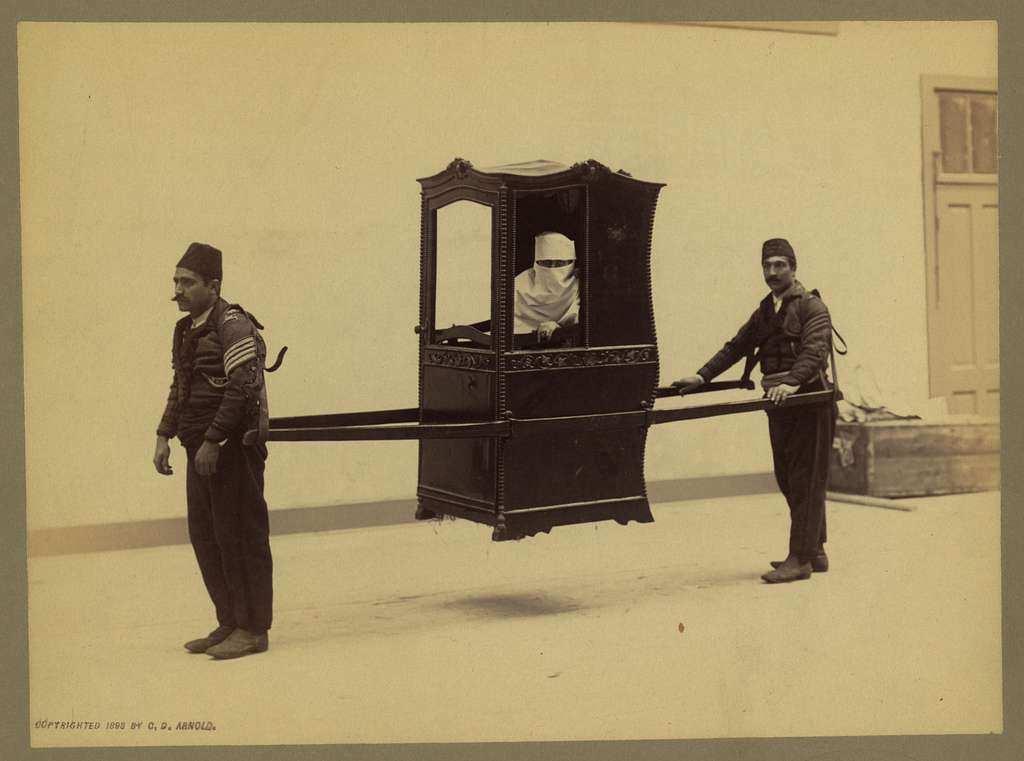
The basic technology behind buses is, of course, the wheel. Potter’s wheels were developed in about 4,000 BC in Mesopotamia and wheels started being used for transport some time after 3,500 BC. For a very long time, however, wheels were not a world-changing technology. Early carts were precarious and slow, and road infrastructure was generally too bad for them to be very useful. For many centuries, carts played a rather modest role in human transport. People rode if they wanted to get somewhere quickly, used pack animals for freight, took sedan chairs or palanquins for luxury travel, and walked for all other purposes. Outside Europe, palanquins continued to be used well into the twentieth century: footage of 1930s Hong Kong still shows besuited young businessmen employing this ancient form of luxury transport.
The use of carriages increased in early modern Europe, as suspension technology improved and a mixture of governments and private businesses laid out proper roads. Phaetons, broughams, landaus, gigs, and chaises replaced sedan chairs for luxury travel, and began to be practical for long journeys. Hire cabs became widespread, and large fleets emerged in cities like London, Paris, and New York, which could be hailed in much the way that motorcabs are today. By the nineteenth century, elite households maintained a private carriage, while middle-class people relied on a range of vehicle sharing and hire arrangements.
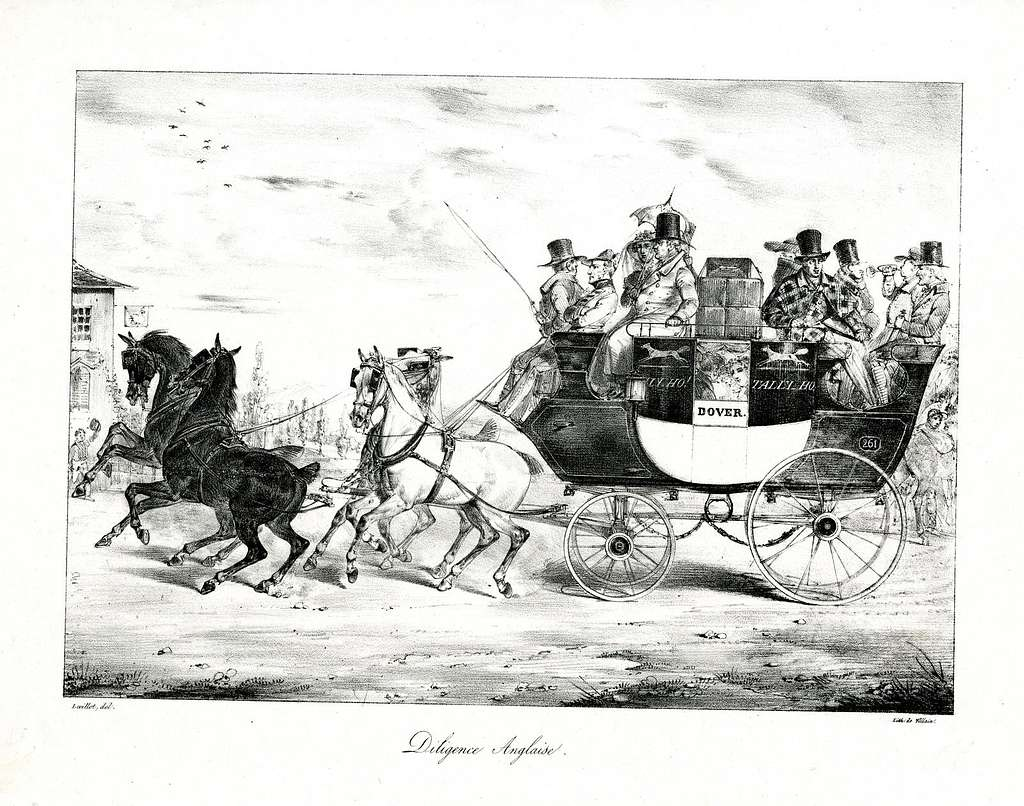
A sophisticated system of commercial coaches also emerged for transporting both passengers and high-value goods like the post. But in several crucial respects, these stagecoaches or diligences were not like buses. Stagecoaches ran only between cities, never within them; seats had to be booked in advance; and they stopped only for rest or changing horses, not to pick up additional passengers along the way.
The first person to invent true buses was the polymath Blaise Pascal, best known for his eponymous wager. Apparently working from first principles, Pascal developed all the key principles of modern bus services: fixed intracity routes, fixed fares, fixed points for boarding and alighting. He launched a company that ran carrosses à cinq sols (five-pence carriages) across Paris. On 18th March 1662, the world’s first regular bus service began operating.

Unfortunately, Pascal had not reckoned with one of the historic enemies of successful bus services: bad regulation. The Parlement of Paris (a kind of municipal government) banned laborers and artisans from using the buses, apparently to ensure ‘the greater comfort and freedom of the bourgeois and meritous classes’. This turned public opinion against the carrosses, and Parisians started to protest against them and interfere with their operations. The authorities initially threatened severe punishments, but, then as now, Parisians were not easily subdued, and by 1677 the company gave up and discontinued its services. The very idea of a bus then seems to have been forgotten.
The second and lasting invention of buses took place 150 years later, in the small city of Nantes in Brittany. The inventor was a former soldier called Stanislas Baudry, a very different figure from Pascal. Baudry ran a public bathhouse in the suburbs of Nantes, and to attract more customers, he began a sort of shuttle service, a carriage that crossed the city and picked people up at fixed locations along the way. Over time, he noticed that many people used his shuttle not to go to his baths but in order to disembark at one of the other pick-up points. In effect, he had started a bus service by accident.

Baudry had a eureka moment, and swiftly established a bus company. Its first buses began running on 30th September 1826, and the company was an immediate success. By January 1828, it had turned a profit of 8,200 francs on an initial investment of 23,500 francs. Baudry quickly began operating services in Bordeaux and Lyon, and in 1828, he persuaded the Parisian authorities to let him introduce a service in Paris. Within eight months Baudry was employing 200 drivers and 800 horses, and his carriages had transported well over 2.5 million passengers.
Sadly, Baudry did not live to enjoy the great transformation that he had wrought. An economic downturn in 1830 briefly threatened his company with bankruptcy, and Baudry shot himself. His despair was premature: after his death, his company adapted, survived and flourished. The mighty Parisian public transport operator today, RATP, descends directly from it through various mergers and transformations.
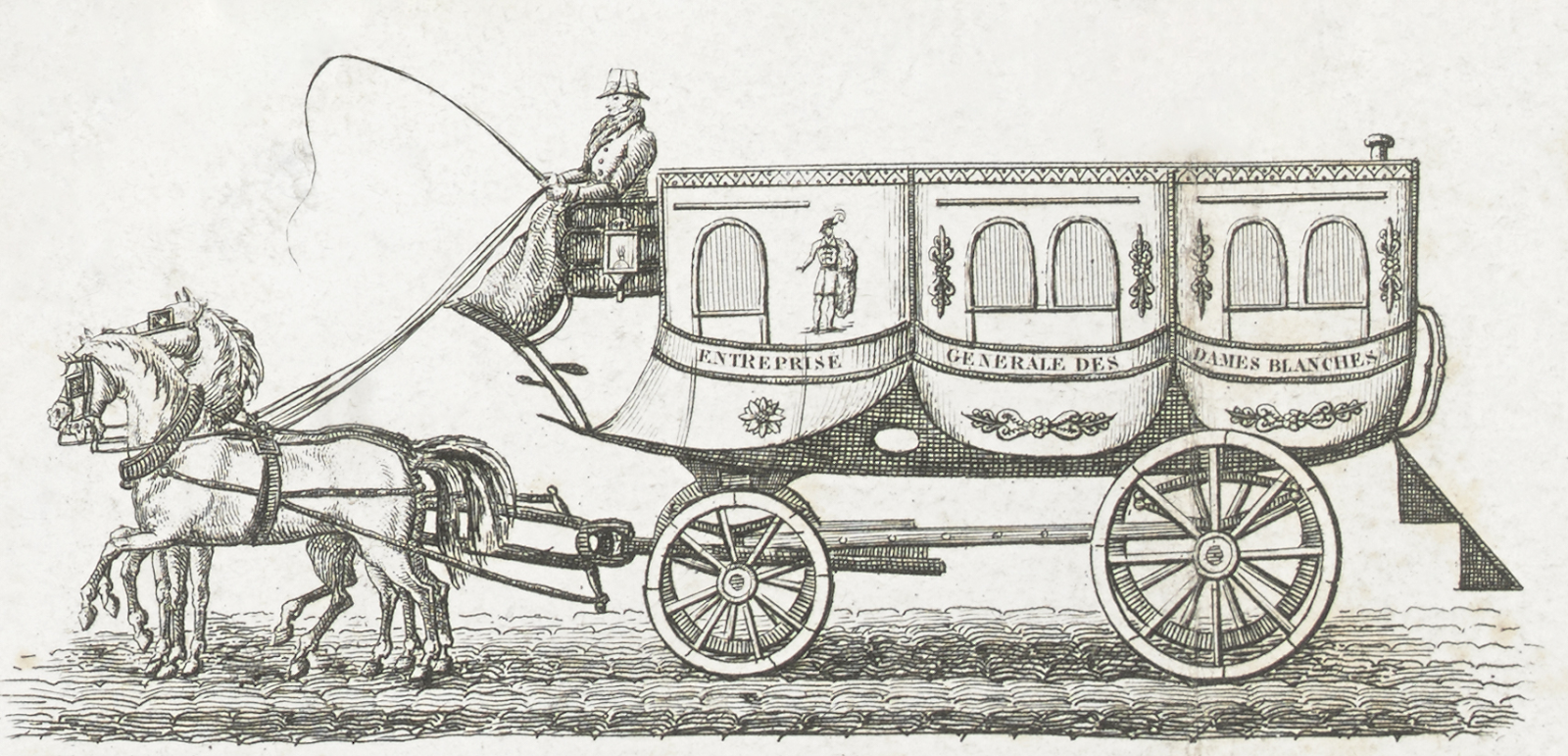
Once the basic idea of a bus had been developed, bus services spread across the world with incredible speed. Baudry had commissioned an Englishman called George Shillibeer to design his bus, and Shillibeer saw no reason why the same idea should not work in England. He returned to London and began running an omnibus service in 1829. Other British cities followed in the course of the 1830s. New York’s first buses began running in the same year; Philadelphia followed in 1831, and Boston in 1835. By 1850, most major cities in Western Europe had horse-drawn bus networks. These became extensive. In 1850, London had about 800 buses, already roughly half as many per capita as it has today.
Rapid innovation continued to reshape public transport through the rest of the nineteenth century. In the 1870s, horse trams replaced buses in many places, especially in the United States. In the 1890s, electric trams swept the world, offering a dramatically better service than horse-drawn vehicles, though with higher upfront costs. In the 1900s, motor buses began to emerge, generally replacing horse-drawn buses by the start of the First World War.
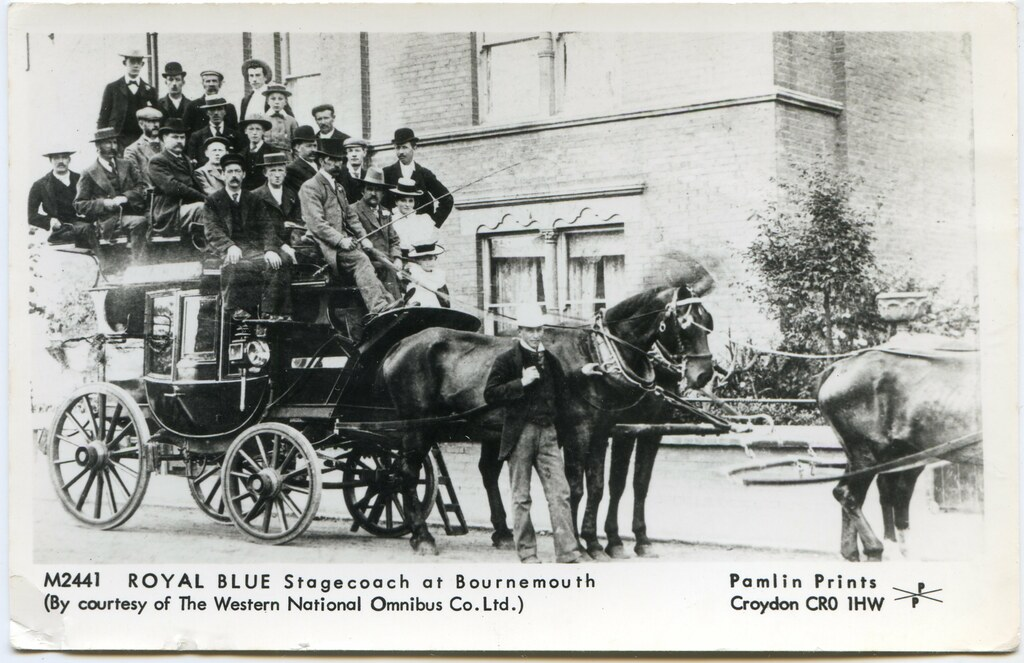
The spread of buses contributed to a sharp decline in private carriage ownership. Wealthy neighborhoods in early nineteenth-century London often feature mews alleys: each property in an upper-class neighborhood like Belgravia had its own coach house backing onto the mews, while mews in middle-class neighborhoods like Islington often had collective stabling for shared or hire carriages. Mews vanished from new developments in the later decades of the nineteenth century, and many older mews were converted into housing or workshops. The nineteenth century thus featured the reverse trend from the twentieth, with public transport capturing market share from private vehicles.
The invention of buses illustrates some broader truths about the history of technology. One is that ideas that seem obvious after the fact were not so beforehand. The German writer Thomas Mann once remarked that all normal schoolchildren can sing rounds like ‘Frère Jacques’ and ‘London bridge is falling down’, but that when they do so, they are unwittingly presupposing the miracle of counterpoint, painstakingly created by some of the greatest geniuses in musical history. Something analogous is true of the millions of big vehicles running along fixed routes to fixed timetables around the world today.
A second moral is that some key inventions are business models rather than physical technology. Wheeled vehicles had existed for millennia before the brilliance of Pascal and the fluke of Baudry’s shuttle generated the idea of bus timetabling. Technological progress is of course immensely important. But our existing endowment of physical technology already holds untold thousands of applications that could transform our lives, just as Baudry’s buses transformed the lives of our ancestors.

Subscribe for $100 to receive six beautiful issues per year.